

How I Build Secure, Scalable, and AI-Ready Applications on Azure
When organizations talk about moving to Azure, the first approach I often hear is:
“Let’s migrate our servers to Azure VMs.”
While that works, after years of designing and implementing Azure solutions across enterprise, government, and regulated environments, I’ve realized something important:
Cloud is not about servers; it’s about speed, scalability, and innovation regardless of the provider (although I m specialised in Azure 😉 )
And that’s exactly why Azure App Service has become one of my most trusted services in almost every architecture I design.
Instead of worrying about patching operating systems, managing IIS, or scaling infrastructure manually, I focus purely on delivering business value and application performance.
In this blog, I’ll share my real-world experience, architectural decisions, lessons learned, and how I now combine Azure App Service with AI services to build smarter, modern cloud platforms.
Why I Moved away from VM-Based Hosting?
Earlier in my cloud journey, most applications were deployed using Infrastructure-as-a-Service (IaaS):
Even for small applications, the operational overhead was heavy.
Every release required:
Server maintenance
Downtime planning
- Infrastructure troubleshooting
It slowed teams down.
When I adopted Azure App Service (Platform-as-a-Service), everything changed.
Microsoft manages the infrastructure layer, and I focus only on:
- The Application
- Security
- Integrations
- Scaling logic
This shift alone reduced deployment time significantly and improved reliability across projects.
What is Azure App Service?
Azure App Service is Microsoft Azure’s fully managed Platform-as-a-Service (PaaS) offering for hosting web applications, REST APIs, and mobile backends without managing servers or operating systems.
From an architectural perspective, App Service abstracts away infrastructure management by running applications on managed compute instances within an App Service Plan, where Azure automatically handles patching, load balancing, scaling, security hardening, and high availability.
At its core, an Azure App Service consists of two main components:
- The App Service Plan
- The App Service
The App Service Plan defines the underlying compute resources including CPU, memory, scaling behavior, and pricing tier.
While multiple applications can share the same plan to optimize cost and performance. This design allows teams to separate infrastructure scaling from application deployment, enabling faster releases and operational flexibility.
Whereas, an Azure App Service supports multiple runtimes including:
- .NET,
- .NET Core,
- Java,
- Node.js,
- Python,
- PHP,
- containerized workloads using Docker,
making it suitable for both traditional and cloud-native architectures. It integrates natively with following:
GitHub, Azure DevOps, CI/CD pipelines, Managed Identity, Azure Key Vault, Application Insights, and Azure Monitor, enabling secure deployments, secret management, and real-time observability without additional configuration.
(refer to my blogs on related material:
- Azure Key Vault - https://techaiquantum.com/2025/12/15/azure-key-vault-a-core-resource-for-securing-secrets-keys-and-certificates/)
- Azure Entra ID - https://techaiquantum.com/2025/08/10/from-chaos-to-control-my-real-world-journey-with-microsoft-entra-id/
- Azure Application Gateway - https://techaiquantum.com/2025/08/04/how-azure-application-gateway-protects-and-optimizes-your-web-applications/
One of the key strengths of App Service is its built-in enterprise capabilities such as auto-scaling, deployment slots (I would call it as staging deployments), SSL/TLS termination, custom domains, authentication/authorization, VNet integration, and backup/restore.
These features significantly reduce the operational overhead typically associated with managing web infrastructure on virtual machines.
How I Use Azure App Service in Real Projects
Let me walk you through some practical scenarios where Azure App Service made a major difference. the key areas where I used this as a triumph card in hosting environments
1. Modernizing Legacy Applications
In one modernization project, I worked with a customer running a legacy PHP and MySQL application on aging on-premises servers. They faced frequent downtime, performance issues, and zero scalability.
Instead of performing a simple lift-and-shift to virtual machines, I redesigned the architecture using Azure App Service, a managed database service, Azure Key Vault, and an Application Gateway with web application firewall capabilities.
By moving to a platform service, we removed the need for server management entirely. The result was faster performance, improved availability, reduced operational costs, and a much simpler deployment process.
The IT team could finally focus on enhancing the application rather than troubleshooting infrastructure.
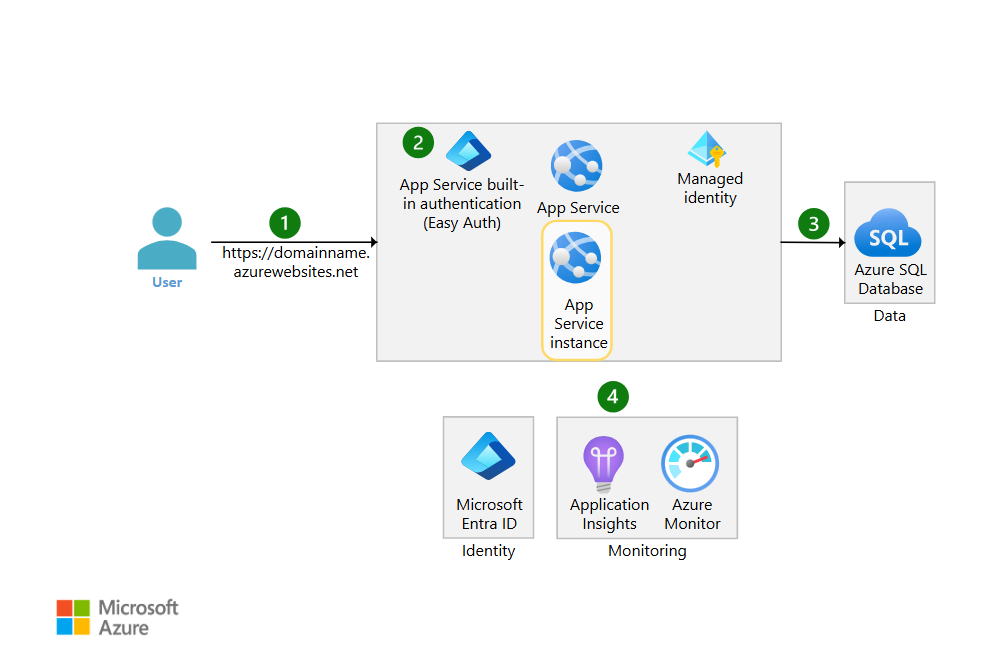
Fig: This is a basic architecture in running web applications on Azure App Service in a single region with related reources
2. Securing Applications with Key Vault Integration
Security has always been a top priority in my designs, and Azure App Service integrates extremely well with modern security practices.
One of the first things I eliminate in any deployment is hard-coded secrets. Storing connection strings or passwords in configuration files is a major risk.
Instead, I enable Managed Identity for the App Service and connect it to Azure Key Vault. The application securely retrieves secrets at runtime without exposing them anywhere in the code or repositories.
This approach not only improves security but also makes credential rotation seamless and supports compliance requirements in regulated industries such as banking and government sectors.
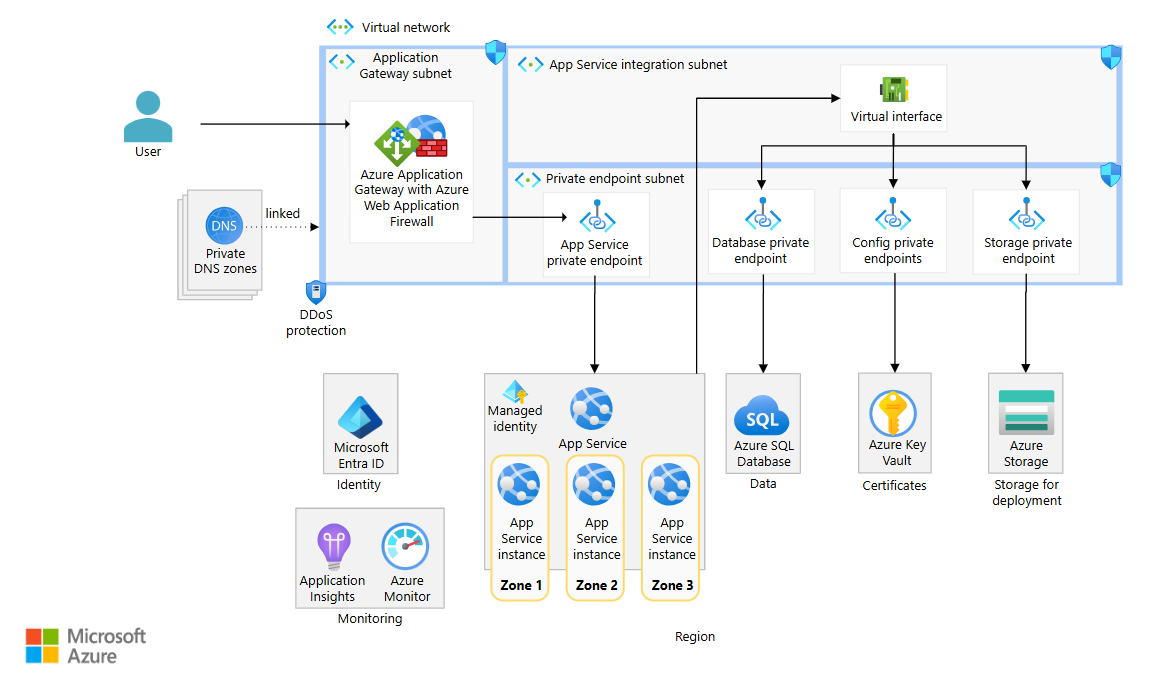
Fig: A basic web app design by focusing on security, high availability, and zone redundancy.
The above arhitecture uses Azure Application Gateway with Web Application Firewall (WAF) to securely expose a public endpoint and route traffic privately to Azure App Service via Private Link. The App Service then connects securely to backend PaaS services like Azure Key Vault and Azure SQL Database through VNet integration and Private Link, ensuring protected, private communication across all components.
3. Handling Traffic Spikes with Auto Scaling
This was another major benefit I consistently see using the Azure App Service is scalability. For customer-facing portals, traffic is rarely predictable.
There are normal days and then sudden spikes during campaigns or seasonal events. With traditional infrastructure, this often meant overprovisioning servers or risking poor performance.
With Azure App Service, I configure auto-scaling rules based on CPU usage or schedules, and Azure automatically adjusts resources in real time.
This ensures consistent performance during peak periods while optimizing costs during quieter hours.
There is no manual intervention, no downtime, and no wasted infrastructure spend.
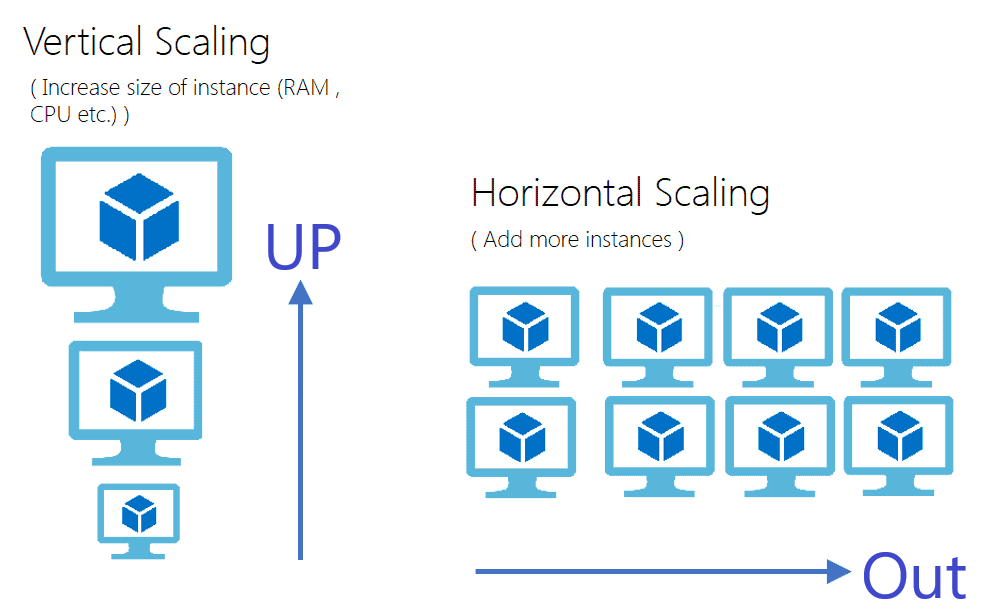
Fig: this diagram shows the scaling options in App Service
4. Faster and Safer Deployments with CI/CD
From a DevOps perspective, Azure App Service has also transformed how I handle deployments.
Its native integration with Azure DevOps and GitHub Actions makes continuous integration and delivery straightforward.
One feature I particularly value is deployment slots. Instead of deploying directly to production, we deploy to a staging slot, validate everything, and then swap instantly. If anything goes wrong, rolling back takes seconds.
This capability has saved multiple production releases and has given teams greater confidence to ship updates more frequently.
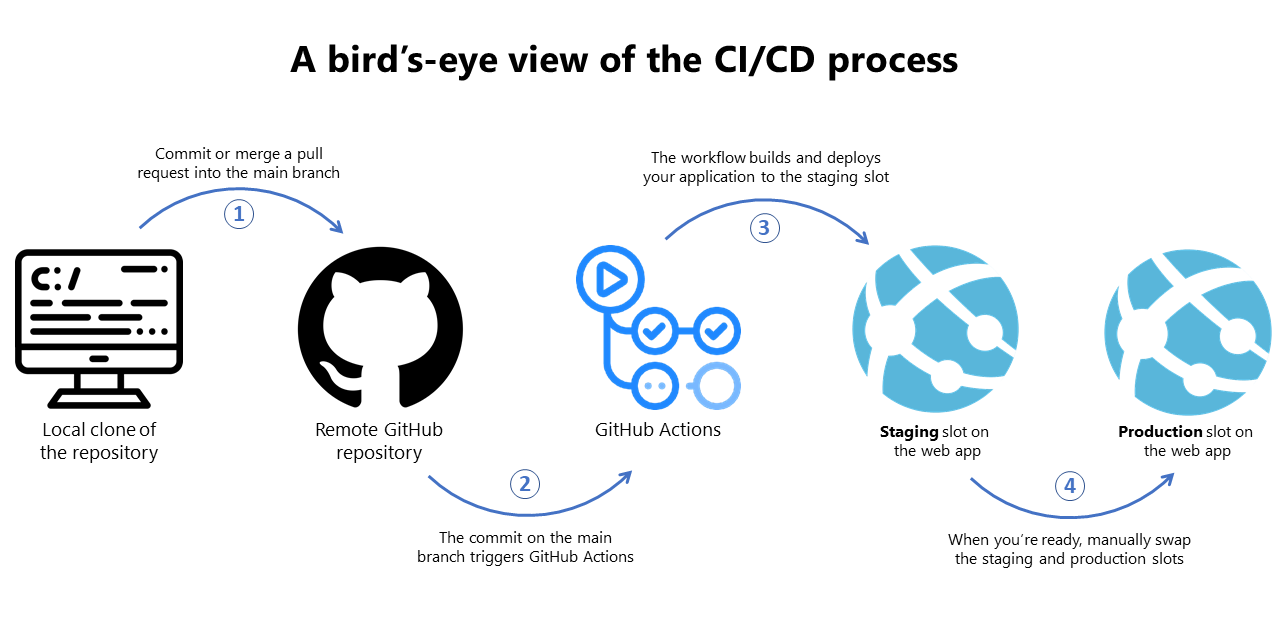
Fig: Above diagram shows the stage of the code being pushed to the Azure App Service
5. Integrating AI with Azure App Service
More recently, I’ve started integrating AI capabilities into applications hosted on Azure App Service, and this is where the platform becomes even more powerful. Because it easily hosts APIs and scales automatically, it serves as an ideal backend for AI-driven solutions.
In one implementation, we built a customer support portal where the backend APIs were hosted on App Service and integrated with Azure OpenAI services. The system could answer customer queries, summarize documents, and automate responses intelligently.
This reduced the support team’s workload and significantly improved user experience. In another case, we hosted data processing APIs that used AI models to classify and analyze incoming information, turning what used to be manual work into automated insights delivered within minutes.
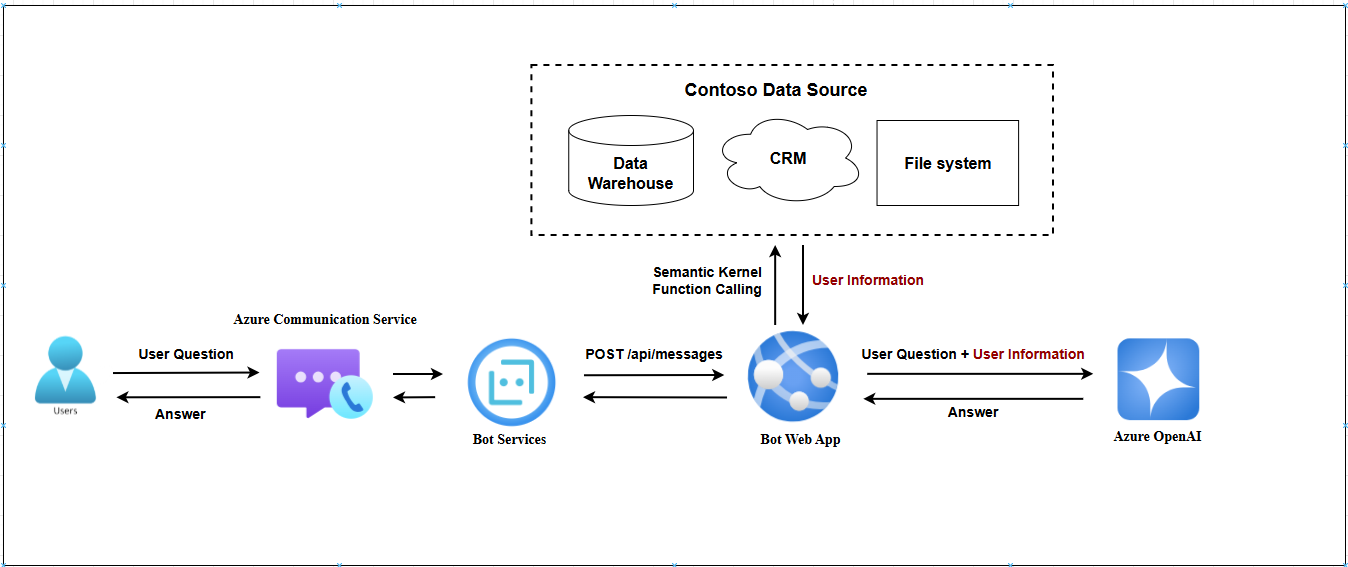
Fig: The diagram shows how to integrate an OpenAI conversational bot with Azure Communication Services chat, using the Microsoft Bot Framework and Semantic Kernel. Where the bot pulls information from an internal knowledge base and delivers natural language, summarized responses to user queries.
The Value it offers
Across all these projects, Azure App Service consistently supports the core principles I value in architecture; strong security, high reliability, operational simplicity, and cost efficiency.
It removes the complexity of infrastructure management while providing enterprise-grade capabilities such as identity integration, private networking, monitoring, scaling, and high availability.
For most modern web applications, APIs, and microservices, it has become my default choice. I now reserve virtual machines only for rare scenarios involving legacy or specialized dependencies.
Moreover, integrating Azuer API Management service can also reflect on your offering; please refer this link to understand how the APIM works: https://techaiquantum.com/2025/11/17/modern-api-governance-with-azure-api-management/
Conclusion
Looking back, Azure App Service has fundamentally changed how I deliver solutions. It has allowed me to move away from managing servers and toward building scalable, secure, and intelligent applications that create real business value.
With the added ability to integrate AI services seamlessly, it’s no longer just a hosting platform; it’s a foundation for modern cloud innovation. If you’re still deploying and managing web servers manually, it might be time to rethink your approach. Let the platform handle the infrastructure so you can focus on what truly matters: building better applications.
In essence, Azure App Service enables organizations to move from an infrastructure-centric model to an application-centric model; where the focus shifts from managing servers to delivering features and business value.
Will Continue more capabilities in the upcoming blog...
Disclaimer: The images used in this content are sourced from Microsoft pages and referenced from Microsoft Learn and other related free materials.
References:
- https://learn.microsoft.com/en-us/azure/app-service/overview
- https://learn.microsoft.com/en-us/azure/architecture/web-apps/app-service-environment/architectures/app-service-environment-standard-deployment
- https://learn.microsoft.com/en-us/azure/architecture/web-apps/app-service/architectures/basic-web-app
- https://learn.microsoft.com/en-us/azure/architecture/web-apps/app-service/architectures/baseline-zone-redundant
- https://azure.github.io/AppService/2020/07/07/zero_to_hero_pt3.html
